
How to Carry Groceries Pain Free
You usually feel it before you get the front door open – the deep groove in your fingers from thin bag handles, the pull in your shoulder, the awkward twist in your back as you reach for keys while carrying too much at once. If you are wondering how to carry groceries pain free, the answer is rarely about strength. It is usually about reducing strain, improving balance, and choosing a setup that works with your routine instead of against it.
A lot of grocery-related pain comes from small habits that add up. One overloaded bag, one long parking lot walk, one staircase, one quick decision to carry everything in a single trip – and suddenly a basic errand feels harder than it should. The good news is that most people can make grocery trips much more comfortable with a few practical changes.
Why grocery carrying causes pain so quickly
Groceries are awkward by design. Weight is uneven, bags swing when you walk, and handles dig into soft tissue. Even if the load is not especially heavy, the way you carry it matters. A gallon of milk in one hand and a stuffed tote in the other can shift your posture enough to irritate your wrist, elbow, shoulder, neck, or lower back.
The problem gets worse when you are tired, rushed, or trying to manage other tasks at the same time. Parents may be juggling kids and bags. Caregivers may be unloading groceries while keeping track of a second person. Older adults may notice that fatigue shows up earlier than it used to. None of that means you are doing something wrong. It means the errand itself needs a better system.
How to carry groceries pain free starts before checkout
Pain-free carrying begins in the store, not in the parking lot. The way you shop affects the way you lift, load, and unload later.
Start by thinking in terms of smaller, balanced loads. If one bag ends up much heavier than the others, you create unnecessary strain on one side of the body. Ask for weight to be distributed more evenly, especially for bottled drinks, canned goods, and pantry staples. Double-bagging can help with durability, but it does not solve the bigger issue if one bag still holds most of the weight.
It also helps to group items by weight and fragility. Put heavier items low and stable, and keep delicate items in a separate bag that does not force you to squeeze or grip harder than necessary. Reaching for a slipping bag often causes more discomfort than the original lift.
If you shop for a week or more at a time, be realistic about total volume. Bigger shops can save time, but they can also create one difficult carry after another. For some people, two smaller trips are easier on the body than one large haul. It depends on your schedule, transportation, and energy level, but it is worth considering if grocery day leaves you sore.
Lift and carry with less strain
When people think about grocery pain, they often focus on the walk from car to kitchen. But the lifting itself is often the first problem.
When picking up bags, keep them close to your body. Reaching out to grab a bag from the far side of a trunk increases stress on your back and shoulders. Turn your whole body instead of twisting from the waist, and bend at the hips and knees when something is low. The closer the load is to your center, the easier it is to control.
Grip matters too. Thin handles concentrate pressure in a small area, which is why your fingers can ache long before your arms feel tired. If you are carrying bags by hand, shorter distances and lighter loads make a real difference. So does using bags with wider handles or transferring groceries into containers designed to be moved more comfortably.
Try not to carry everything in one trip if that forces you to overload your hands. Saving a minute is not worth an afternoon of shoulder or back pain. Multiple lighter trips are usually the better trade-off.
Use balance, not willpower
One of the simplest ways to reduce pain is to stop carrying uneven loads. If all the heavy items go on one side, your body compensates automatically. You lean, tighten one shoulder, and adjust your stride without noticing it. Over time, that uneven effort adds up.
Aim for symmetry whenever possible. If you are carrying items by hand, try to match weight from left to right. If one side must be heavier, switch sides on the next trip rather than repeating the same pattern every time. This is especially helpful if you already deal with stiffness in one shoulder, one wrist, or one side of the lower back.
Balance also matters in motion. Bags that swing, bump your legs, or shift unexpectedly make walking harder. A stable carrying method is often more comfortable than a lighter but less controlled one.
The tool you use can change the whole trip
For many people, the real answer to how to carry groceries pain free is simple: stop carrying them in your hands whenever possible.
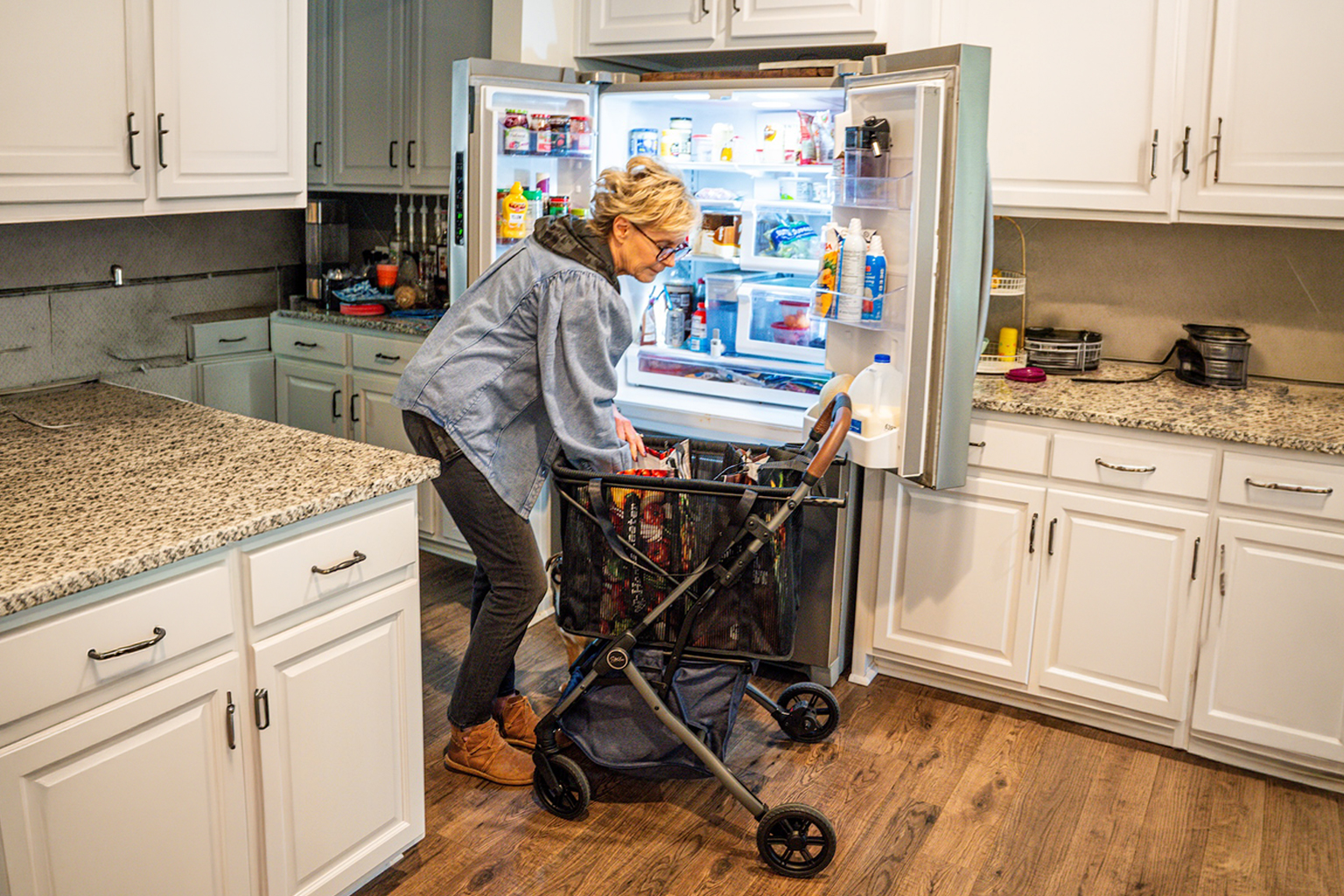
A foldable shopping cart can take the load off your fingers, shoulders, and back while making groceries easier to manage from store to home. This is especially useful if you walk to shop, use public transportation, park far away, or live in an apartment building where the distance from curb to kitchen is longer than it sounds.
The key is choosing something stable, easy to fold, and practical enough to use regularly. If a cart is bulky, awkward, or hard to store, people stop using it. If it is organized well and adapts to everyday errands, it becomes part of the routine. That is where a thoughtfully designed cart can make a real difference. Brands like Strolee focus on everyday convenience, with features that help shoppers move groceries more comfortably and keep essentials organized instead of piled into painful hand-carried loads.
This approach is not just for large grocery runs. It can make smaller, more frequent trips feel easier too, which is often a better fit for people who want to stay active without overloading themselves.
Make your route easier on your body
Sometimes the pain is not from the weight alone. It is from how many transitions the trip requires. Lift into the cart, out of the cart, into the trunk, out again, up steps, through a doorway, onto the counter. Each transfer is another chance to strain your back or grip too hard.
Look at your route and remove friction where you can. Park closer to the cart return if unloading from your vehicle is the hardest part. Clear a path at home before you leave to shop so you are not stepping around shoes, pets, or clutter while carrying bags. If you have stairs, bring groceries up in smaller batches or use a cart up to the point where hand-carrying is absolutely necessary.
A little planning may sound minor, but it often makes the difference between a manageable errand and one that leaves you sore.
Build a grocery setup that fits real life
There is no single right method for everyone. A person in a city walk-up has different needs than someone driving from a suburban supermarket. A caregiver shopping for a household of four has different demands than a retired adult picking up a few essentials twice a week.
That is why the best system is the one you will actually use. For some people, pain relief comes from packing lighter bags and making two trips. For others, it comes from switching to a foldable cart, using insulated bags that organize items better, or breaking one big weekly shop into smaller runs. Convenience matters because when a tool or habit fits real life, it becomes consistent.
If your hands hurt most, focus on reducing grip load. If your shoulders or neck tighten up, look at balance and bag swing. If your back bothers you, pay attention to lifting, twisting, and how far you carry items from your body. Pain patterns often point to the part of the routine that needs to change.
When to rethink your routine completely
If grocery trips regularly leave you aching, numb, or exhausted, that is a sign your current method is too demanding. It does not mean you need to stop shopping independently. It usually means the process needs more support and better organization.
A more comfortable routine may include lighter loads, better bagging, smarter lifting, and a cart that lets you move more with less strain. Small adjustments can restore a surprising amount of confidence, especially when errands have started to feel physically draining.
Groceries are part of everyday life. They should not leave your hands throbbing or your back tight for the rest of the day. The more your shopping setup supports comfort, balance, and control, the easier it becomes to keep your routine working for you – not the other way around.
The best change is often the one that makes next week feel easier before you even leave the house.

